When Rabbi Abraham Joshua Heschel was asked about his marching in Selma during the civil rights movement in America during the 1960's, he said he was praying with his feet. This Shabbat, my son and I prayed with our Mitsubishi. In a week that was plagued with great moral challenges and tragic loss of life on a flotilla that was loaded with humanitarian aid to Gaza, Itamar and I decided to take a trek up to Um El Fahm, the largest Arab city in Israel, to visit my friend Abed and his family.
Earlier this week, I was devouring press reports, blogs, analyses, op-ed pieces and listserv tirades. I had discussions, wrote, pondered and implored friends to address the situation with patience. Yes, something needs to be done, but the first step in solving a problem is identifying it. We don't have enough information about the flotilla and the Israeli response. I propose an independent inquiry.
Still, there is the matter of human pain and outrage at what was experienced, even if those feelings are based on possible misperceptions, misinformation, or simply desired understandings. People often see the world as they perceive it. It's a matter of the lenses we wear. By going to Um El Fahm, my son and I were addressing those feelings in our own humble way. This wasn't a revolution. It was drip irrigation.
I have known Abed for 19 years. He travels five days a week to Tel Aviv to clean hallways in apartment buildings. When he cleaned our hallways, I would have him come in for Turkish coffee and conversation. This is how our friendship was conducted. When we left Israel 14 years ago, I lost contact with Abed. Recently, he spotted my wife on the street in Tel Aviv and made her promise to have me call. I did, and it was great to hear from him, but I never made the extra effort to come drink coffee with him in his home, until now.
In the Talmud, (Sanhedrin 4:8, 37a) we learn, "Whoever saves a life, it is considered as if he saved an entire world." Jews share this quote with our Moslem cousins. I often wonder what the rabbis meant by saving a life. What we did by visiting Abed and his family was really a small gesture. No lives were saved. They fed us. Yet, I was compelled to try to be part of the solution, and, for me, that meant showing a human face and compassion in a time of great sadness. In the Ethics of the Fathers, we read, "In a place where there is no man (mensch, good person) try to be a man." This Jewish value feels like it has been replaced with the secular, "When in Rome, act like a Roman."
I am in Israel and I want to act as a Jew, at least as a Jew feels commanded. Acting like a Roman, at this juncture in time, would mean to join a chorus. It could be the choir of Jews who feel compelled to defend our homeland, right or wrong. "Either you are with us or you are our enemy," the Bush doctrine, or the choir of "Israel can do no right," which is having its heyday right now.
Being a mensch turned out much better. We had a really delicious Arabic lunch, enjoyed the great company of Abed's family, went to an art museum, and picked fruit in the garden. Our conversations were political and very personal. We both regret the loss of human life. We both hope for the end of the closure that is the meta cause of the flotilla events and we both celebrated the potential of our shared country once the craziness of war finds its peaceful resolution.

Saturday, June 5, 2010


Response to a rabbi regarding the flotilla
A rabbi from a community I care deeply about recently wrote an upsetting message to the congregation in the aftermath of the flotilla disaster. In the spirit of refraining from using lashon harah, the evil tongue, I would like to address his comments anonymously. (See his piece below)
Rabbi,
I am very concerned with the message you presented to the community in the aftermath of the flotilla disaster. My concern stems from innocent statements which were made four days after the event, "[T]he more I learned about it, the more my reaction has evolved, "
The premise of my dissertation about peace education is that we are not literate enough to effectively manage our existing discourse with our Palestinian neighbors. As this research pertains to your statement, I must be critical of the learning, early judgment and pronouncement.
In Kohelet (Ecclesiastes), we learn, "To every thing there is a season." Four days after the horrible event is not the season to pass judgment. I would like to suggest that part of the discourse literacy we need to achieve peace is to follow King Solomon's words, "To every thing there is a season," with the same self control that we learn of from Ben Zoma, in Pirkei Avot, The Ethics of the Fathers, "Who is mighty? He who subdues his instinct. (4:1) "
It is our very human instinct to try to rationalize and defend our behavior. We cannot live with cognitive dissonance, the state of being in which our thoughts are inconsistent. It is hard to think of ourselves as good people and know that we have done wrong. This is the role of teshuvah, repentance, in Judaism. Jews understand we are flawed beings, "only human." We recognize our flaws, repent and try to turn them around. To try to make consonance of our actions with our positive self perception is, therefore, not very Jewish behavior. The Jewish response is in Pirkei Avot. We must try to subdue the instinct to always understand our behavior as consistent with our belief in our righteousness.
Now is not the time to judge the situation. Now is the time to call for an independent inquiry into the flotilla disaster.
During the month of Elul, we reflect on our sins and atone. We do this secondarily with God. First we do it with those who we have wronged. It is not a Kantian endeavor. We don't look into a mirror. We address the other. It is dialectical. Having the Israeli Defense Force or the government investigate itself is not the way Jews address their behavior.
You claim that, "Israeli soldiers initially fired paintballs, and only resorted to live artillery when attacked." This is what I call convenient information, at this stage in our understanding of the events. It works wonders on the dissonance we are feeling, but it hasn't gone through the critical inquiry we need to attempt to honestly understand what happened. Where does your information come from?
You said that, "[T]he turning point for me came when listening to a radio report from the British Broadcasting Corporation." In that report you heard a woman activist say," I would do it again tomorrow. It shows the terror and murderers of the Israeli government."
To this you responded, "[T]his activist would sacrifice human life to illustrate and publicize her feelings toward Israel. This kind of reaction is the opposite of the values of Israel, which two years ago released hundreds of prisoners to ensure the safe return of three civilians."
I would like to suggest that these are two very different dialogues. The activist was addressing the world when she said she wants to expose Israel. Israel was addressing two audiences; the world and Israel, internally.
On one hand, there was a complicated Jewish message to the world which needs to be unpacked. We love our sons and daughters and will do a lot to bring them home. This is why I explained to my son that after the first soldier was seen being beaten by the flotilla activists, we continued to send more troops. But there is more to this Jewish message to the world.
My son asked, "Why not just shoot from the helicopter?" This very innocent question reveals a lot. Maybe, as Israel suggests, they didn't expect to be confronted with violence from peace activists. I would like to believe something different. It is the argument we made when we sent infantry into Jenin during the second intifada instead of bombing from above and obtaining the military objectives without loss of Israeli lives. "We love all of God's creations and will do our best to protect their lives." This perspective is moral, in a vacuum, and somewhat innocent. Could it be that Israel sent our soldiers onto the boat to speak to the activists instead of fight with them? With all of my Zionist ethos, I wish this were the case, but so much time elapsed before the confrontation that it just doesn't seem plausible that Israel found it most wise to board the ship at four in the morning to discuss peaceful resolution to the situation.
The second message from Israel is to herself. It is about maintaining order within. If the government did not make painful efforts to bring home our soldiers, it would communicate to all the parents, like me, who have Israeli children, "Don't be so certain that when we send your children off to war that we will do everything in our power to return them." This is a major problem today when Israel faces four years of the absence of our kidnapped soldier, Gilad Shalit, whose parents continuously reminds us in the Israeli media that Israel is not doing enough to return their son.
The last part of your message is really the most upsetting to me. You said, "Israel is not perfect, and we should not expect it to be." As Jews we should aspire for perfection. If Israel is just a normal country, as many Israelis and Jews want it to be, then what does this say about the events of 1948, 1967, and the entire Zionist endeavor?
I am not a Zionist simply because I want to have a homeland for Jews in the historical home of my people. That is only a part of the dream. And it is not because I understand that Jews need a refuge from anti-Semitism, that is a reality forced upon me. I am a Zionist because I think our intellectual inheritance has provided something special and important for us to offer the world. Certainly, we cannot fulfill our purpose if we are destroyed by anti-Semitism or disappear by lack of interest and commitment. Likewise, I believe that much of our purpose is fulfilled in our historic homeland. But we definitely cannot fulfill our mission if we don't expect the highest of moral standards for our collective endeavors.
To excuse our behavior with a lack of moral imperative, or because, as you say,"[Israel] is surrounded by countries that oppose its very existence," is to rationalize and excuse the deep inconsistency between our behavior and our purpose. Israel will be a normal country, if it is only, " a modern-day miracle," as you claim. But anyone who reads the books of the prophets understands that miracles were not arbitrary. They were intentional.
It is not enough to be, "a place where persecuted Jews found hope and a culture was reborn." There are many cultures in the world. Jews live comfortably and contribute much from the diaspora. If we want a country, there has to be more. Israel should be a culture of peace with aspirations for justice. This requires serious introspection and teshuva, interactive atonement among neighbors. Excusing our behaviors prematurely to make us feel good about our existence is not a recipe for peace nor justice. It is not the Jewish answer to statehood.
Sincerely,
Dr. David J. Steiner
*****
The "Free Gaza" Flotilla and Its Aftermath
The recent incident involving the "Free Gaza" flotilla and Israeli Navy has generated enormous publicity. It is saddening and tragic. I must admit that when I first heard the news reports, I said to myself, "How could Israel have done this?" Yet, the more I learned about it, the more my reaction has evolved.
I am thinking not only of the violence--clearly illustrated on video--engaged in by the "nonviolent" protesters, and the indication that Israeli soldiers initially fired paintballs, and only resorted to live artillary when attacked. These are important facts, but the turning point for me came when listening to a radio report from the British Broadcasting Corporation.
I am thinking not only of the violence--clearly illustrated on video--engaged in by the "nonviolent" protesters, and the indication that Israeli soldiers initially fired paintballs, and only resorted to live artillary when attacked. These are important facts, but the turning point for me came when listening to a radio report from the British Broadcasting Corporation.
The BBC is not known for being pro-Israel. Yet, in interviewing one of the leading activists on the flotilla, its reporter asked her if she had any regrets in leading the "humanitarian" mission that resulted in at least nine deaths. The reporter wondered if--given the subsequent loss of life--the activists regretted not accepting the Israeli offer (prior to the raid of the ship) to deliver its humanitarian supplies to Gaza. She replied, "Absolutely not. I would do it again tomorrow. It shows the terror and murderers of the Israeli government."
In other words, this activist would sacrifice human life to illustrate and publicize her feelings toward Israel. This kind of reaction is the opposite of the values of Israel, which two years ago released hundreds of prisoners to ensure the safe return of three civilians, and which has already begun an investigation into what happened aboard the "Free Gaza" ship.
Israel is not perfect, and we should not expect it to be. Neither should we automatically excuse wrong-headed acts simply because they are done by Israel. Yet, we cannot refuse to recognize the predicament in which Israel lives. It has an extraordinarily strong military and vibrant economy, yet it is surrounded by countries that oppose its very existence. Even with deep-seated problems among its own political and religious leadership, it remains a modern-day miracle, a place where persecuted Jews found hope and a culture was reborn. The vast majority of its citizens yearn to live in peace with its neighbors. It is our obligation to bring this fleeting dream closer to reality.
Tuesday, June 1, 2010
Explaining the attack on the flotilla to my ten year old son

I could also start by condemning the actions of the government which led to this catastrophe, but that would be uncritically assessing a very complex situation, something that goes against my democratic sensibilities.
I will start with the pain I feel for the deaths of 9 civilians whose families will miss them forever and whose country folk will make martyrs of them, further perpetrating the violent animosity.
Last night my children couldn't watch the news with us. They were terrified by the images of Israeli soldiers being beaten by angry mobs of metal rod bearing thugs. This is what they saw before they ran away to their bedrooms. This is what many Israelis will see and never look deeper. But in a democratic country, a country not defined exclusively by free elections (only 63% of Israelis voted in our last election, the lowest number ever) but by democratic values, it is incumbent upon citizens to look deep and ask challenging questions. This is what my son did this morning as he grilled me on the situation.
"Why did we drop our soldiers into a boat of angry people with clubs?" "Why didn't they just shoot from the helicopters?" "What was on the boat that was so important they had to fight over it?" "Why didn't Israel just let the boat go to where it was headed?" OK, I will kvell for a second. My son asks great questions. The challenge is answering him in a way he can understand and come to conclusions for himself, unlike the way Israeli citizens will be answered by their government.
There are some answers I cannot portent to provide at this point in time. I want my son to know that I don't have all the answers and that there are good and bad ways of acquiring them. I tell him that we will need an independent commission of inquiry (not in those words although I do work to improve his vocabulary) into the situation. I explain that we cannot expect the army or government to investigate themselves, and get full disclosure of the facts. For his sake, I compare this to him fighting with his sisters. When we ask him what happened, does he ever say 'I acted wrong. I should have thought more before…'?
"Why didn't Israel just shoot from the helicopters?" I through this question back at him. "Why?" His response was exactly where I hoped it would be as a result of my parenting. "If we did that, we would probably kill a lot more people." For my son, this was a great answer. My fear is that in Israel we will take this to illustrate how "moral" we are and how highly we value human life, but that is a crock of … (I won't say it). Asking questions on their own, without context is a great way of getting the answers you want instead of the answers you need to hear. There is no way to examine this issue without the remaining questions. "What was on the boat that was so important they had to fight over it?" and "Why didn't Israel just let the boat go to where it was headed?"
These questions really address the crux of the matter and open up a slew of other important questions. It is important to address the question "What was on the boat that was so important they had to fight over it?" in a manner befitting the situation. We were told that there was humanitarian aid. We can't be sure without checking? We had to weigh the possibilities of not checking and having "bad stuff" get into Gaza, against the possibilities of blocking aid from getting to people who need it.
Here I didn't go into all the details because it is a lot for the young mind of my son. There is a precedent for dishonesty and smuggling "bad stuff" into Gaza, I told him. I didn't know how to explain that Gaza is ruled by Hamas, a terror organization that won the Palestinian election and lost control over the majority of Palestinian territory in a violent civil conflict with Fatah. I didn't try to explain that many of my Palestinian friends told me that they couldn't vote for Fatah any longer because of the corruption, even if they didn't vote Hamas. I didn't try to explain that the Palestinian election system can run two candidates from the same party on one ticket against one from the opposition ending in loss by plurality. These are the kinds of information I expect my fellow citizens to look for when they judge our neighbors, but my son is too young to understand this.
What was hardest to explain was that Israel has been conducting a siege of Gaza and blocking humanitarian aid to its civilians in order to get Hamas out of power. This point I considered explaining. I had an analogy, the South Africa divestiture movement I participated in as a college student, except in that case the people who would suffer from the lack of aid were the ones who asked for the divestment. Gazans, whether they agree with Hamas or not, want to rebuild their homes after the devastation of the war we had with them two winters ago. They want medical supplies and food. I was embarrassed to tell my son that Israel was spreading videos on You Tube showing that Gaza has plenty of food and supplies. What would I tell him, that what really matters is what people think about the bad things you do not whether they are bad in and of themselves?
Why didn't Israel just let the boat in is also complicated? Many will claim that that would be a terrible precedent. I told my son that this question is great and asked him how he might have done this. He said, "Can't America check what's on the boats for us?" He said, "If it's not bombs and guns, then why not let the people deliver the stuff?" Again I kvell. My son's insight was amazing. Would it have been so hard to seek a neutral inspector for these boats? On one hand, Israel claims that they acted according to international law, on the other, they reject the involvement of international bodies designed to prevent these types of situations. How crazy is this?
In the Judaism that I grew up with, that makes me want to live in Israel, that makes me want to be a rabbi, we have a saying that goes, "whoever saves a life, it is considered as if he saved an entire world. (Babylonian Talmud, Sanhedrin 4:8 (37a)" Islam shares this saying. I cannot understand, and I can surely not explain to my son, how it is that our Jewish homeland and country has not acted according to this very important and contemporary value.
Saturday, May 1, 2010
Lagging on this 33rd Day of the Omer
Tonight is Lag B'Omer and the country will fill with bonfires and little kids running around with bows and arrows pretending to be Bar Kochva's army. Another 400,000 will visit Mount Miron where the (supposed) grave of Rabbi Shimon Bar Yochai is located. In many ways this is the most tragic holiday of the year and it has to do with the shortsightedness of the founders of the state. In my view, the 33rd day in the counting of the Omer is a clear sign of "lag" (pun intended) in our civil development.
The founders wanted to change the identity of the Israeli Jew from someone who was a frail scholar, or walked meekly to his death in Auschwitz without resistance, to somebody who fought back with courage and bravery. The problem with this approach was that not all courage and bravery is intelligent, ethical or democratic. In the end of his days, Shimon Bar Kochva was a vigilante who, likely, assassinated Rabbi Elazar (depending on how you read Talmud), and who defied the Sanhedrin. He was a vicious leader who wanted his soldiers to cut off a part of their finger as a sign of loyalty, and his revolt led to the murder of over half a million Jews living in Eretz Yisrael. By edifying Bar Kochva, the founders of Israel either intended to put the ends before the means or they were hoping to have a critically illiterate Jewish population who wouldn't ask why we celebrate.
The stories of Rabbi Shimon Bar Yochai are much different and it is for the reader to determine whether he is a sainted scholar or a zealot or both. The problem is that 400,000 Jews will make him a sainted scholar by visiting his grave and performing all kinds of superstitious acts with the hope of divine response. Why is this a problem? Well, I admit that the rabbis beliefs, at times, were similar to what I am calling here superstitious, but it is a problem because the performance of them is avodah zara, idol worship, and it is making holy a place in space as opposed to a moment in time.
I would argue based on my understandings of Jewish holiness, that we create holiness in time. Shabbat brings us holiness each week (as you might like to read about in Abraham Joshua Heschel's acclaimed book The Shabbat), as do the other moments in our calendar. The only places that have ever been graced with holiness are those were the shechina have visited, and Jews, for instance, clearly don't identify where Mount Sinai is. In fact, unlike Catholics, who have located and named Santa Catalina, as the place where God revealed Himself to Israel, we Jews do not identify holy spaces, with the exception of the place designated as holy in the Bible, our Temple in Jerusalem.
Why do I ascribe this problem, also of new Jewish behavior, to our founders, because they never fulfilled the promise in our Declaration of the Establishment of the State of Israel, the promise of a, "Constitution which shall be adopted by the Elected Constituent Assembly not later than the 1st October 1948," and this has led us to a situation where we have at least two Jewish states living in the Land of Israel, one which clearly lives by the laws and governance of the democratically elected government, and others.
I am not suggesting that all the people who went to Mount Miron this weekend are not good citizens. I do, however, believe that the founders failed us by not forging a way for all Israeli Jews to respect and participate in Clal Yisael, as our sages demanded, "All of Israel is engaged with each other." Instead of this national unity, we have different school systems, political parties which represent strictly religious perspectives, and a growing population that do not respect the laws of the state.
I remember, for instance, shopping for sandals with my father in law in Beit Shemesh. In the city center, a merchant didn't have the sandal I wanted in my size. He suggested that I go to his brother's store in the religious part of town. As further encouragement, he told me that there I wouldn't be charged value added tax. This is because this portion of our citizenry in Israel don't participate in the funding of
"All of Israel is engaged with each other," is not an idle claim. It is a demand of our sages who saved Israel from collapse almost two thousand years ago. It is the glue that brings to life the words of the Bat Kol, God's voice, which proclaimed that, "[Both] these and these are the words of a living God." Without the engagement of Clal Yisrael, constructively engaging each other, in an agreed upon framework, we are lost among the nations and lost to ourselves.
If we really want to engage in the constructive use of writing our narrative, then let's turn Lag B'Omer into a day of discourse about how we want to live our lives, together, in a united, sovereign and democratic state with a constitution and an agreed upon ethic of civility. When we reach that moment in time, we will clearly have created holiness and have lots of reasons for celebration.
The founders wanted to change the identity of the Israeli Jew from someone who was a frail scholar, or walked meekly to his death in Auschwitz without resistance, to somebody who fought back with courage and bravery. The problem with this approach was that not all courage and bravery is intelligent, ethical or democratic. In the end of his days, Shimon Bar Kochva was a vigilante who, likely, assassinated Rabbi Elazar (depending on how you read Talmud), and who defied the Sanhedrin. He was a vicious leader who wanted his soldiers to cut off a part of their finger as a sign of loyalty, and his revolt led to the murder of over half a million Jews living in Eretz Yisrael. By edifying Bar Kochva, the founders of Israel either intended to put the ends before the means or they were hoping to have a critically illiterate Jewish population who wouldn't ask why we celebrate.
The stories of Rabbi Shimon Bar Yochai are much different and it is for the reader to determine whether he is a sainted scholar or a zealot or both. The problem is that 400,000 Jews will make him a sainted scholar by visiting his grave and performing all kinds of superstitious acts with the hope of divine response. Why is this a problem? Well, I admit that the rabbis beliefs, at times, were similar to what I am calling here superstitious, but it is a problem because the performance of them is avodah zara, idol worship, and it is making holy a place in space as opposed to a moment in time.
I would argue based on my understandings of Jewish holiness, that we create holiness in time. Shabbat brings us holiness each week (as you might like to read about in Abraham Joshua Heschel's acclaimed book The Shabbat), as do the other moments in our calendar. The only places that have ever been graced with holiness are those were the shechina have visited, and Jews, for instance, clearly don't identify where Mount Sinai is. In fact, unlike Catholics, who have located and named Santa Catalina, as the place where God revealed Himself to Israel, we Jews do not identify holy spaces, with the exception of the place designated as holy in the Bible, our Temple in Jerusalem.
Why do I ascribe this problem, also of new Jewish behavior, to our founders, because they never fulfilled the promise in our Declaration of the Establishment of the State of Israel, the promise of a, "Constitution which shall be adopted by the Elected Constituent Assembly not later than the 1st October 1948," and this has led us to a situation where we have at least two Jewish states living in the Land of Israel, one which clearly lives by the laws and governance of the democratically elected government, and others.
I am not suggesting that all the people who went to Mount Miron this weekend are not good citizens. I do, however, believe that the founders failed us by not forging a way for all Israeli Jews to respect and participate in Clal Yisael, as our sages demanded, "All of Israel is engaged with each other." Instead of this national unity, we have different school systems, political parties which represent strictly religious perspectives, and a growing population that do not respect the laws of the state.
I remember, for instance, shopping for sandals with my father in law in Beit Shemesh. In the city center, a merchant didn't have the sandal I wanted in my size. He suggested that I go to his brother's store in the religious part of town. As further encouragement, he told me that there I wouldn't be charged value added tax. This is because this portion of our citizenry in Israel don't participate in the funding of
- the paving of our streets,
- the payment of salaries to our police force,
- the payment of teachers salaries
"All of Israel is engaged with each other," is not an idle claim. It is a demand of our sages who saved Israel from collapse almost two thousand years ago. It is the glue that brings to life the words of the Bat Kol, God's voice, which proclaimed that, "[Both] these and these are the words of a living God." Without the engagement of Clal Yisrael, constructively engaging each other, in an agreed upon framework, we are lost among the nations and lost to ourselves.
If we really want to engage in the constructive use of writing our narrative, then let's turn Lag B'Omer into a day of discourse about how we want to live our lives, together, in a united, sovereign and democratic state with a constitution and an agreed upon ethic of civility. When we reach that moment in time, we will clearly have created holiness and have lots of reasons for celebration.
Monday, April 19, 2010
My Dance with Dvora

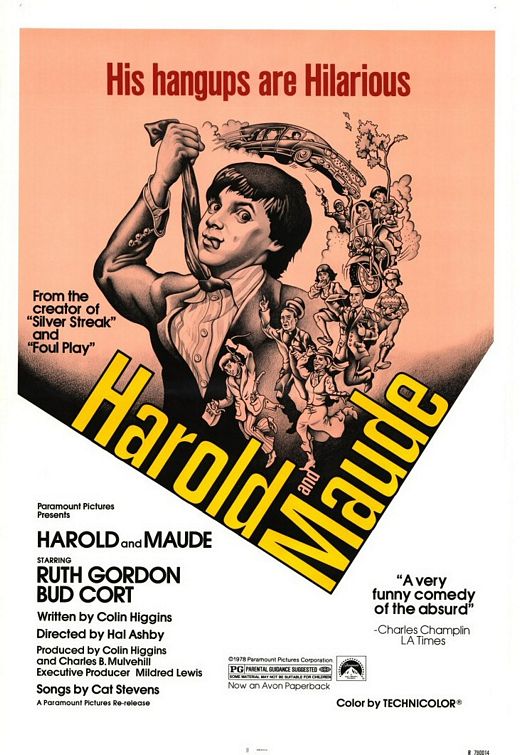
I first met Dvora Bertonov at the home of Ruti Dyches, our mutual friend and acting teacher. Dvora was 79 and I was a mere 29. It wasn't exactly Harold and Maude, the acclaimed (1971) Hal Ashby movie featuring Ruth Gordon as an 80 year Holocaust survivor and Bud Cort as her young lover, but it was a different kind of love as I understood from her frequent reference to me as "mein kind."
Mein kind was not just a term of endearment. In 1972, Dvora lost her only son, Ido Bin Gurion, to suicide after a long battle with depression. Ido, a wunderkind, was an actor, singer, and the first to translate Edgar Allen Poe into Hebrew. No wonder, he was the grandson of the renowned author Micha Josef Berdyczewski (Berdichevsky), the Hebrew, Yiddish and German author described as "the first Hebrew writer living in Berlin to be revered in the world of German letters." Berdichevsky was the father of Dvora's husband, Emanuel Bin Gurion, who spent much of his life archiving his father's legacy. If this is not enough, Ido's maternal grandfather was Yehoshua Bertonov, the doyen of the Hebrew National Theater in Moscow which became The Bima before the troupe came to Mandate Palestine in 1928. One of Dvora's favorite stories was of her dancing before the Hebrew National Poet, Chaim Nachman Bialik as a young child in the shadow of her parent's work at The Bima.
Bridging between Ido's and Dvora's legacies, I had the rare opportunity to interview the members of Ido's singing group in the Nachal branch of the Israeli Defense Force. Ido served with such legends as Arik Einshtein and Uri Zohar, and some of the troupe members gathered for an interview I conducted for a CD ROM Dvroa and I collaborated on. This was just one of the many expressions of love and respect for Dvora I observed in our 15 year friendship.
Unlike the Ruth Gordon character in Harold and Maude who took her life on her eightieth birthday, Dvora was full of life at eighty with no plans to stop. She had just acted in the movie, The Flying Camel and was working on a duet dance performance called "Curfew" (Im Kibui Orot). While she had received the Israel Prize recognizing her contributions to Israeli Arts and Culture in 1991, in 1995, at eighty years old, she was reaching new heights. This is when we had the bright idea to celebrate her work with an 80th birthday party at the Suzanne Dallal Dance Center in Neveh Tzedek. The night was spectacular. The audience was filled with dignitaries including the Mayor of Tel Aviv Roni Milo, Ehud Manor, Naomi Shemer, Chava Albershtein and more. On stage, Dvora was interviewed by Rivka Michaeli, lauded by former President Yitzhak Navon, and entertained by several dance companies including the Kibbutz Dance Troupe. Of course the show was stolen when Dvora and her young dance partner took the stage and performed "Curfew."

Big names and big performances were par for the course with this small woman of great stature, as her friend Dan Almagor used to refer to her. But maybe her biggest contributions were in the field of dance research and ethnography. I remember once sitting in Dvora's living room with Judy Alter, a dance professor at UCLA, listening to the two of them discuss dance in the performance of Jewish ritual in the Tanach. In that same conversation, Dvora explained the difference between Ghanese and Indian dancing as they related to the tiles of her two dance ethnographies, Dancing to the Earth and Dancing to the Horizon. "In Ghana," explained Dvora, "they hunch over and dance to the mother Earth. In India," she explained as she demonstrated, "they dance to the horizon."
Academics and the spotlight aside, my favorite moments with Dvora were when we sat alone in a Tel Aviv cafe and she would explain Schopenhauer to me or talk about the religious philosophies of the Gurdjieff. When my first child, Maya, was born, Dvora explained to me that Maya is a name for the creative energy of the Gods in India.
Once we had Dvora over for Shabbat chamin at my mother in law's house in Beit Shemesh. I invited a peace activist friend from Ramallah, Hania Bitar. During the meal Dvora said to Hania, "If my father knew what coming here would mean to your family, I am not so sure that he would have come." She then proceeded to ask with complete bewilderment why we can't all just get along? It was really a beautiful scene, especially since we had 4 generations, Dvora from Russia, my mother in law from Morocco, my wife and Hania from here and my daughters from America, and all of them call this place home.
I left Israel in 1996, shortly after the birthday celebration. For 13 years we stayed in touch long distance and during my summer visits. One of the greatest of these was when Dvora took my three children into her basement dance studio in her apartment building in Holon and told them about and demonstrated her performances of The Begger's Dance in The Dybuk. Dvora handed out instruments from her vast collection of musical folk instruments and the kids played along as she danced. This is my most treasured memory of Dvora, and it is the one that will stay with me as she dances her way back to mother Earth. Good bye Mein Imma.
Saturday, April 3, 2010
Passover letter to President Obama
Dear President Obama,
I am an American Jew living in Israel. In America, I proudly voted for you for the Senate and for president. I campaigned with my three children for your presidency in Michigan, Iowa, Wisconsin, Indiana and Illinois. I came to Israel to train to be a rabbi and to live among my people in a sovereign Jewish state with my wife and children. When I finish my studies, I hope to return to America and to join you in the pursuit of a more perfect union.
My wife and I also have Israeli citizenship and as dual citizens, we want to express how much we appreciate your stewardship of the relationship between our two countries. Sometimes, as my Israeli father in law says, “You can’t see the forest because of the trees.” I think this is the case of my Jewish homeland.
We are a well-intentioned people. We treat our destiny as if we have a unique relationship with God. Not all of us believe this narrative, but we all live within it and it frames our worldview. Soon we will be celebrating Passover. We will engage in the ritual of a Passover Seder and recall our collective memory of slavery and redemption. Whether this narrative is history or not, we all treat ourselves as a nation of freed slaves who have an obligation to wrestle with our freedom and our nationhood. Sometimes we do this better, sometimes worse.
Added to this narrative is the narrative of anti-Semitism. Anyway you look at it, we are a people who have been oppressed for being who we are. It is an ascribed identity that is irrational but must be treated with the utmost seriousness because of the numerous human tragedies it has led to. If for no other reasons than the Holocaust and the continued hatred of my people for the simple fact of their Jewish birth, we need a country of our own.
Israel isn’t perfect. We are a country of immigrants, many of who were forcibly driven from their places of birth. We are still working on writing a constitution to regulate our collective rights and responsibilities. We still don’t give freedom of religion to all of our Jewish citizens, a reality which was specifically harmful to me and my wife when, living here sixteen years ago, we were forced to get a civil marriage abroad in order for our Jewish wedding with a Reform rabbi in Israel to be accepted.
But we are also a country that takes its role in the comity of nations very seriously. We recently participated on a grand scale in Haitian relief. We have even tried to do the same for some of our Arab neighbors in times of natural disaster. We contribute greatly to biotechnology and the computer industry, and we have a considerable flock of great artists and writers who make the world a more cultural and beautiful place to live.
Our problem now is not seeing the forest for the trees, and it is very similar to our ancestors, who we will soon recall on Passover. Granted freedom, they didn’t know how to behave as a free nation and built a golden calve. Despite their redemption, they continued to accept and participate in the institution of slavery, and blessed with a great leader, many chose to rebel and some yearned to return to the tyranny of Egypt.
Today we suffer from similar misgivings. Granted our sovereignty, we continue to deny it to our neighbors, people who, like us, are not tourists in this land. We have built golden calves, idols, out of land instead of creating holiness in time as a nation that shows mercy and compassion to the people living under our rule, qualities we ascribe to our God. And as free people in our own land, we now show little understanding or appreciation for our freedom as we import foreign workers to do that which is hated by us and turn away refugees when we are best suited to understand their pain.
President Obama, sometimes it takes a courageous leader, a Moses, to throw the tablets at the people as a wake up call. We need someone who responds to injustice, as the young prophet did with the Egyptian taskmaster, someone who seeks justice among brothers, as he did when he saw his own people fighting amongst themselves, and who seeks justice for the stranger, as he did when he defended Jethro’s daughters at the well. These are the qualities of great leaders, and they are the reasons why God chose Moses to demand of Pharaoh, “Let my people go.”
Unfortunately, we don’t have these types of leaders here. Instead of self- reflection, our leadership has created an environment of self-censorship. Instead of moral leadership, we have come to rely on loyalty over justice and vilify those fine citizens who question the integrity of our ways. And we have become a nation that speaks in the evil doublespeak of George Orwell’s 1984. We demand of our Palestinian neighbors, as a precondition for serious peace negotiations, that they acknowledge the Jewishness of our state, as if this were really something they could judge and in spite of the fact that our behavior is not very Jewish. We talk about the eternal, indivisible capitol of the Jewish people as if we ever ruled outside of the walled ancient city of Jerusalem, and then use this language for a land grab of conquered Arab real estate beyond the city walls. And we talk about living in a democratic state, when we have over two million people living under our control without basic civil rights, Palestinians and foreign workers alike.
So president Obama, I am urging you to continue your pursuit of justice in this region. Don’t feel obligated to seek the approval of public affairs committees who don’t represent the silent majority of my people. We need another Jethro, a non-Jewish leader who saw us from the outside and advised our leadership in ways that made us a better nation.
It will not be enough this year for Jews to say, at the end of our Seders, “Next year in Jerusalem.” Rather, we must make the name of our eternal capital fulfill its mission, Jerusalem, city of peace. Then, and only then, will we Jews be able to sanctify our redemption by living the values of our ancestors and acting responsibly among the rest of God’s creations.
It is with your leadership, President Obama, that we will finally leave the wilderness of war and bloodshed and enter the promised land of peace and sovereignty, two states for two peoples. This Passover, I wish you Godspeed in your mission.
Most sincerely,
David Steiner
Tel-Aviv, Israel
I am an American Jew living in Israel. In America, I proudly voted for you for the Senate and for president. I campaigned with my three children for your presidency in Michigan, Iowa, Wisconsin, Indiana and Illinois. I came to Israel to train to be a rabbi and to live among my people in a sovereign Jewish state with my wife and children. When I finish my studies, I hope to return to America and to join you in the pursuit of a more perfect union.
My wife and I also have Israeli citizenship and as dual citizens, we want to express how much we appreciate your stewardship of the relationship between our two countries. Sometimes, as my Israeli father in law says, “You can’t see the forest because of the trees.” I think this is the case of my Jewish homeland.
We are a well-intentioned people. We treat our destiny as if we have a unique relationship with God. Not all of us believe this narrative, but we all live within it and it frames our worldview. Soon we will be celebrating Passover. We will engage in the ritual of a Passover Seder and recall our collective memory of slavery and redemption. Whether this narrative is history or not, we all treat ourselves as a nation of freed slaves who have an obligation to wrestle with our freedom and our nationhood. Sometimes we do this better, sometimes worse.
Added to this narrative is the narrative of anti-Semitism. Anyway you look at it, we are a people who have been oppressed for being who we are. It is an ascribed identity that is irrational but must be treated with the utmost seriousness because of the numerous human tragedies it has led to. If for no other reasons than the Holocaust and the continued hatred of my people for the simple fact of their Jewish birth, we need a country of our own.
Israel isn’t perfect. We are a country of immigrants, many of who were forcibly driven from their places of birth. We are still working on writing a constitution to regulate our collective rights and responsibilities. We still don’t give freedom of religion to all of our Jewish citizens, a reality which was specifically harmful to me and my wife when, living here sixteen years ago, we were forced to get a civil marriage abroad in order for our Jewish wedding with a Reform rabbi in Israel to be accepted.
But we are also a country that takes its role in the comity of nations very seriously. We recently participated on a grand scale in Haitian relief. We have even tried to do the same for some of our Arab neighbors in times of natural disaster. We contribute greatly to biotechnology and the computer industry, and we have a considerable flock of great artists and writers who make the world a more cultural and beautiful place to live.
Our problem now is not seeing the forest for the trees, and it is very similar to our ancestors, who we will soon recall on Passover. Granted freedom, they didn’t know how to behave as a free nation and built a golden calve. Despite their redemption, they continued to accept and participate in the institution of slavery, and blessed with a great leader, many chose to rebel and some yearned to return to the tyranny of Egypt.
Today we suffer from similar misgivings. Granted our sovereignty, we continue to deny it to our neighbors, people who, like us, are not tourists in this land. We have built golden calves, idols, out of land instead of creating holiness in time as a nation that shows mercy and compassion to the people living under our rule, qualities we ascribe to our God. And as free people in our own land, we now show little understanding or appreciation for our freedom as we import foreign workers to do that which is hated by us and turn away refugees when we are best suited to understand their pain.
President Obama, sometimes it takes a courageous leader, a Moses, to throw the tablets at the people as a wake up call. We need someone who responds to injustice, as the young prophet did with the Egyptian taskmaster, someone who seeks justice among brothers, as he did when he saw his own people fighting amongst themselves, and who seeks justice for the stranger, as he did when he defended Jethro’s daughters at the well. These are the qualities of great leaders, and they are the reasons why God chose Moses to demand of Pharaoh, “Let my people go.”
Unfortunately, we don’t have these types of leaders here. Instead of self- reflection, our leadership has created an environment of self-censorship. Instead of moral leadership, we have come to rely on loyalty over justice and vilify those fine citizens who question the integrity of our ways. And we have become a nation that speaks in the evil doublespeak of George Orwell’s 1984. We demand of our Palestinian neighbors, as a precondition for serious peace negotiations, that they acknowledge the Jewishness of our state, as if this were really something they could judge and in spite of the fact that our behavior is not very Jewish. We talk about the eternal, indivisible capitol of the Jewish people as if we ever ruled outside of the walled ancient city of Jerusalem, and then use this language for a land grab of conquered Arab real estate beyond the city walls. And we talk about living in a democratic state, when we have over two million people living under our control without basic civil rights, Palestinians and foreign workers alike.
So president Obama, I am urging you to continue your pursuit of justice in this region. Don’t feel obligated to seek the approval of public affairs committees who don’t represent the silent majority of my people. We need another Jethro, a non-Jewish leader who saw us from the outside and advised our leadership in ways that made us a better nation.
It will not be enough this year for Jews to say, at the end of our Seders, “Next year in Jerusalem.” Rather, we must make the name of our eternal capital fulfill its mission, Jerusalem, city of peace. Then, and only then, will we Jews be able to sanctify our redemption by living the values of our ancestors and acting responsibly among the rest of God’s creations.
It is with your leadership, President Obama, that we will finally leave the wilderness of war and bloodshed and enter the promised land of peace and sovereignty, two states for two peoples. This Passover, I wish you Godspeed in your mission.
Most sincerely,
David Steiner
Tel-Aviv, Israel
Passover Pita
Passover is here in Israel. The season of our joy, the celebration of our freedom, holiday of matzah and the arrival of spring. And yes, it is a joyful time in the Jewish country. We read in the newspapers about the pilgrims who arrived in Jerusalem to receive the priestly blessing and about the continued growth of the economy. On the beach yesterday with my son, I heard people sing the echoes of Seder songs stuck in their heads after the mere one night of recounting our Exodus story as is required in Israel. Oh what a joy to live, if only for an extended hiatus, in the holy land.
There is, however, an undertow to this holiday celebration which is increasingly bothersome to me and reflects a larger trend in Judaism. It could be best explained with the example of my friend Ofer.
Ofer is a great guy. He and I come from very very different worlds. His parents were immigrants from Iraq. He worked hard, at the exclusion of a higher education, to make his small fortune and started with the mini-market next to my apartment 18 years ago. Now he runs a successful Shwarma and falafel restaurant in central Tel Aviv. I remember two things very well from the five years we were neighbors. One is the coffees he would make us in the little kitchen in the store, the other the kindness he showed to poor people who he frequently gave food to for free. Ofer was there at my wedding and at the birth of my first child. We have a bond.
That said, Ofer is a businessman, and, as such, he looks to fill needs in society. During this week, that need is something resembling leavened flour that can house the contents of a falafel or shwarma. In short, Ofer's kosher restaurant continues to sell food as usual with a kosher for Passover version of his usual pita. What's the big deal, you might ask, and how does this relate to a larger trend in Judaism? As I see it, this is the perfect microcosm for understanding the direction of our people and, in a sense, the changing relationship we Jews are having with the God who we believe took us out of Egypt.
For many people in Tel Aviv, where I live, Passover is an excuse for a party, time to see family, paid vacation days from work and a bump in the road to culinary delights. It may be a time to tell the stories of our collective memory of exodus, but it is not a time of unique commandments or rituals that guide our collective behavior, and I am not trying to make a bad name for Tel-Aviv, my second favorite city after Chicago. The conclusion I get from this is that we are more a community of memory than we are of belief. But belief is not the only reason we refrain from leaven during Passover. In fact, the only reason I don't eat bread this week is because it helps me remember my collective past and reminds my that the bread of affliction is still being served around the world.
This year, my mother's husband, grandfather of my children, an African-American, sat at my mother in law's table for Seder. Just before we sang Oh Freedom, the Negro spiritual used frequently in civil rights demonstrations, I reminded everyone that Grandpa Claude is the person at the table who is best suited to really recall the enslavement of his ancestors. What I didn't say was that as an African-American, Claude remembers differently.
Rabban Gamliel reminds us, at our seders, that whoever does not discuss the pascal lamb, the matzah and the bitter herbs, has not completed the Passover observance properly. What does he mean? Does he want us to discuss the minutiae of what makes matzah kosher for the holiday or does he want us to discuss the expediency with which we had to flee Egypt and why that didn't allow time for our bread to rise? Does he want us to focus on cute furry mammals or is he interested in their role in past ritual observance? Does he care whether we eat horseradish or bitter lettuce or whether we remember how Pharaoh's treatment of us as resident aliens, enemies of the state and slaves made our lives so bitter? In short, as the innocent son asks, “What is this?”
Today, particularly in Israel, the so-called “wise” son rules. He asks a narrow, almost scientific question, “What are these testimonies, statutes and laws?” and we answer with narrow answers about why Ofer's pita replacement is kosher but not Shlomo's pita. And we forget the answers given to the wicked and innocent sons, that God did things for us when we were in Egypt and that He led us to freedom with a strong hand.
What I want to know is where is freedom in Ofer's pita? Where is memory?
More and more these days, I find Judaism focusing on the letters of the law and not the spirit and purpose. It reminds me, in a way, of the dilemma I have when I sit at a red light for an excessively long time, late at night, with no cars on the street. I ponder whether I should drive through the red or not. The purpose of the law, I understand, is to moderate traffic patterns, but there is no traffic. Thus far, I have been conservative and decided that I don't want the law interpreted by each individual, on her own, so I remain faithful to the letter, but in truth, I am not adhering to the spirit of the law which only wants to keep people safe and traffic flowing. The law doesn't intend to disrespect my time.
Some might not like the comparison between human law and that of the divine. I can respect that. But in many ways, this comparison is useful. I am not completely in favor of every Jew taking the tradition in her own hands. Just as we persist as a community of memory, I think that memory must serve a collective function. There is no value in remembering that “my father was a wandering Aramean,” if it doesn't teach us something about being strangers in strange lands and compassion. But, on the other hand, I am more fearful of strict adherence to the law, especially when some Jews dictate for all what the tradition might be. This can lead to Passover as the wise son will understand it, as a set of testimonies, statutes and laws at the expense of larger social missions.
I believe that Ofer's matzah is dangerous because it makes the holiday about laws and not their purposes. The Passover Seder, on the other hand, is wonderful because it is our chance to lean back and recline as we consider why we do the things we do, and it forces us to do it together in a framework that uses memory to instruct our decisions about the future.
The problem is that we only have a Seder once a year and that leaves us a gap that is filled by chief rabbis, non-democratically chosen community leaders and self-interested politicians. We don't participate in a Jewish national Seder, or dialog, neither as a country nor as a people. Our Jewish homeland hasn't had a constitution since it's establishment 62 years ago. And now we are acting as if we have no future without the intervention of God's strong hand.
So this year, as I avoid my friends kosher for Passover pita, and crunch my matzah, and remember the suffering of my ancestors, and grapple with the realities of Jewish statehood, I ask why remember the pascal lamb, the matzah and the bitter herbs, if doesn't lead us to celebrate our freedom and remember the slavery of others? But more importantly, I ask how I can make the spirit of the law come before the letter and how I can reach an understanding of this spirit collectively with all of my people?
There is, however, an undertow to this holiday celebration which is increasingly bothersome to me and reflects a larger trend in Judaism. It could be best explained with the example of my friend Ofer.
Ofer is a great guy. He and I come from very very different worlds. His parents were immigrants from Iraq. He worked hard, at the exclusion of a higher education, to make his small fortune and started with the mini-market next to my apartment 18 years ago. Now he runs a successful Shwarma and falafel restaurant in central Tel Aviv. I remember two things very well from the five years we were neighbors. One is the coffees he would make us in the little kitchen in the store, the other the kindness he showed to poor people who he frequently gave food to for free. Ofer was there at my wedding and at the birth of my first child. We have a bond.
That said, Ofer is a businessman, and, as such, he looks to fill needs in society. During this week, that need is something resembling leavened flour that can house the contents of a falafel or shwarma. In short, Ofer's kosher restaurant continues to sell food as usual with a kosher for Passover version of his usual pita. What's the big deal, you might ask, and how does this relate to a larger trend in Judaism? As I see it, this is the perfect microcosm for understanding the direction of our people and, in a sense, the changing relationship we Jews are having with the God who we believe took us out of Egypt.
For many people in Tel Aviv, where I live, Passover is an excuse for a party, time to see family, paid vacation days from work and a bump in the road to culinary delights. It may be a time to tell the stories of our collective memory of exodus, but it is not a time of unique commandments or rituals that guide our collective behavior, and I am not trying to make a bad name for Tel-Aviv, my second favorite city after Chicago. The conclusion I get from this is that we are more a community of memory than we are of belief. But belief is not the only reason we refrain from leaven during Passover. In fact, the only reason I don't eat bread this week is because it helps me remember my collective past and reminds my that the bread of affliction is still being served around the world.
This year, my mother's husband, grandfather of my children, an African-American, sat at my mother in law's table for Seder. Just before we sang Oh Freedom, the Negro spiritual used frequently in civil rights demonstrations, I reminded everyone that Grandpa Claude is the person at the table who is best suited to really recall the enslavement of his ancestors. What I didn't say was that as an African-American, Claude remembers differently.
Rabban Gamliel reminds us, at our seders, that whoever does not discuss the pascal lamb, the matzah and the bitter herbs, has not completed the Passover observance properly. What does he mean? Does he want us to discuss the minutiae of what makes matzah kosher for the holiday or does he want us to discuss the expediency with which we had to flee Egypt and why that didn't allow time for our bread to rise? Does he want us to focus on cute furry mammals or is he interested in their role in past ritual observance? Does he care whether we eat horseradish or bitter lettuce or whether we remember how Pharaoh's treatment of us as resident aliens, enemies of the state and slaves made our lives so bitter? In short, as the innocent son asks, “What is this?”
Today, particularly in Israel, the so-called “wise” son rules. He asks a narrow, almost scientific question, “What are these testimonies, statutes and laws?” and we answer with narrow answers about why Ofer's pita replacement is kosher but not Shlomo's pita. And we forget the answers given to the wicked and innocent sons, that God did things for us when we were in Egypt and that He led us to freedom with a strong hand.
What I want to know is where is freedom in Ofer's pita? Where is memory?
More and more these days, I find Judaism focusing on the letters of the law and not the spirit and purpose. It reminds me, in a way, of the dilemma I have when I sit at a red light for an excessively long time, late at night, with no cars on the street. I ponder whether I should drive through the red or not. The purpose of the law, I understand, is to moderate traffic patterns, but there is no traffic. Thus far, I have been conservative and decided that I don't want the law interpreted by each individual, on her own, so I remain faithful to the letter, but in truth, I am not adhering to the spirit of the law which only wants to keep people safe and traffic flowing. The law doesn't intend to disrespect my time.
Some might not like the comparison between human law and that of the divine. I can respect that. But in many ways, this comparison is useful. I am not completely in favor of every Jew taking the tradition in her own hands. Just as we persist as a community of memory, I think that memory must serve a collective function. There is no value in remembering that “my father was a wandering Aramean,” if it doesn't teach us something about being strangers in strange lands and compassion. But, on the other hand, I am more fearful of strict adherence to the law, especially when some Jews dictate for all what the tradition might be. This can lead to Passover as the wise son will understand it, as a set of testimonies, statutes and laws at the expense of larger social missions.
I believe that Ofer's matzah is dangerous because it makes the holiday about laws and not their purposes. The Passover Seder, on the other hand, is wonderful because it is our chance to lean back and recline as we consider why we do the things we do, and it forces us to do it together in a framework that uses memory to instruct our decisions about the future.
The problem is that we only have a Seder once a year and that leaves us a gap that is filled by chief rabbis, non-democratically chosen community leaders and self-interested politicians. We don't participate in a Jewish national Seder, or dialog, neither as a country nor as a people. Our Jewish homeland hasn't had a constitution since it's establishment 62 years ago. And now we are acting as if we have no future without the intervention of God's strong hand.
So this year, as I avoid my friends kosher for Passover pita, and crunch my matzah, and remember the suffering of my ancestors, and grapple with the realities of Jewish statehood, I ask why remember the pascal lamb, the matzah and the bitter herbs, if doesn't lead us to celebrate our freedom and remember the slavery of others? But more importantly, I ask how I can make the spirit of the law come before the letter and how I can reach an understanding of this spirit collectively with all of my people?
Subscribe to:
Posts (Atom)
Subscribe



 Posts
All Comments
Posts
All Comments