Monday, April 19, 2010

My Dance with Dvora


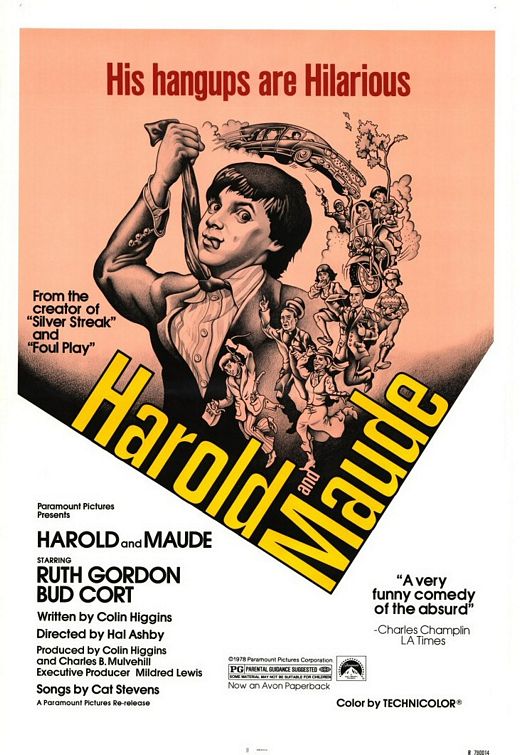
I first met Dvora Bertonov at the home of Ruti Dyches, our mutual friend and acting  teacher. Dvora was 79 and I was a mere 29. It wasn't exactly Harold and Maude, the acclaimed (1971) Hal Ashby movie featuring Ruth Gordon as an 80 year Holocaust survivor and Bud Cort as her young lover, but it was a different kind of love as I understood from her frequent reference to me as "mein kind."

Mein kind was not just a term of endearment. In 1972, Dvora lost her only son, Ido Bin Gurion, to suicide after a long battle with depression. Ido, a wunderkind, was an actor, singer, and the first to translate Edgar Allen Poe into Hebrew. No wonder, he was the grandson of the renowned author Micha Josef Berdyczewski (Berdichevsky), the Hebrew, Yiddish and German author described as "the first Hebrew writer living in Berlin to be revered in the world of German letters." Berdichevsky was the father of Dvora's husband, Emanuel Bin Gurion, who spent much of his life archiving his father's legacy. If this is not enough, Ido's maternal grandfather was Yehoshua Bertonov, the doyen of the Hebrew National Theater in Moscow which became The Bima before the troupe came to Mandate Palestine in 1928. One of Dvora's favorite stories was of her dancing before the Hebrew National Poet, Chaim Nachman Bialik as a young child in the shadow of her parent's work at The Bima.

Bridging between Ido's and Dvora's legacies, I had the rare opportunity to interview the members of Ido's singing group in the Nachal branch of the Israeli Defense Force. Ido served with such legends as Arik Einshtein and Uri Zohar, and some of the troupe members gathered for an interview I conducted for a CD ROM Dvroa and I collaborated on. This was just one of the many expressions of love and respect for Dvora I observed in our 15 year friendship.
Unlike the Ruth Gordon character in Harold and Maude who took her life on her eightieth birthday, Dvora was full of life at eighty with no plans to stop. She had just acted in the movie, The Flying Camel and was working on a duet dance performance called "Curfew" (Im Kibui Orot). While she had received the Israel Prize recognizing her contributions to Israeli Arts and Culture in 1991, in 1995, at eighty years old, she was reaching new heights. This is when we had the bright idea to celebrate her work with an 80th birthday party at the Suzanne Dallal Dance Center in Neveh Tzedek. The night was spectacular. The audience was filled with dignitaries including the Mayor of Tel Aviv Roni Milo, Ehud Manor, Naomi Shemer, Chava Albershtein and more. On stage, Dvora was interviewed by Rivka Michaeli, lauded by former President Yitzhak Navon, and entertained by several dance companies including the Kibbutz Dance Troupe. Of course the show was stolen when Dvora and her young dance partner took the stage and performed "Curfew."


Big names and big performances were par for the course with this small woman of great stature, as her friend Dan Almagor used to refer to her. But maybe her biggest contributions were in the field of dance research and ethnography. I remember once sitting in Dvora's living room with Judy Alter, a dance professor at UCLA, listening to the two of them discuss dance in the performance of Jewish ritual in the Tanach. In that same conversation, Dvora explained the difference between Ghanese and Indian dancing as they related to the tiles of her two dance ethnographies, Dancing to the Earth and Dancing to the Horizon. "In Ghana," explained Dvora, "they hunch over and dance to the mother Earth. In India," she explained as she demonstrated, "they dance to the horizon."

Academics and the spotlight aside, my favorite moments with Dvora were when we sat alone in a Tel Aviv cafe and she would explain Schopenhauer to me or talk about the religious philosophies of the Gurdjieff. When my first child, Maya, was born, Dvora explained to me that Maya is a name for the creative energy of the Gods in India.

Once we had Dvora over for Shabbat chamin at my mother in law's house in Beit Shemesh.  I invited a peace activist friend from Ramallah, Hania Bitar. During the meal Dvora said to Hania, "If my father knew what coming here would mean to your family, I am not so sure that he would have come." She then proceeded to ask with complete bewilderment why we can't all just get along? It was really a beautiful scene, especially since we had 4 generations, Dvora from Russia, my mother in law from Morocco, my wife and Hania from here and my daughters from America, and all of them call this place home.

I left Israel in 1996, shortly after the birthday celebration. For 13 years we stayed in touch long distance and during my summer visits. One of the greatest of these was when Dvora took my three children into her basement dance studio in her apartment building in Holon and told them about and demonstrated her performances of The Begger's Dance in The Dybuk. Dvora handed out instruments from her vast collection of musical folk instruments and the kids played along as she danced. This is my most treasured memory of Dvora,  and it is the one that will stay with me as she dances her way back to mother Earth. Good bye Mein Imma.

Saturday, April 3, 2010

Passover letter to President Obama

Dear President Obama,

I am an American Jew living in Israel. In America, I proudly voted for you for the Senate and for president. I campaigned with my three children for your presidency in Michigan, Iowa, Wisconsin, Indiana and Illinois. I came to Israel to train to be a rabbi and to live among my people in a sovereign Jewish state with my wife and children. When I finish my studies, I hope to return to America and to join you in the pursuit of a more perfect union.

My wife and I also have Israeli citizenship and as dual citizens, we want to express how much we appreciate your stewardship of the relationship between our two countries. Sometimes, as my Israeli father in law says, “You can’t see the forest because of the trees.” I think this is the case of my Jewish homeland.

We are a well-intentioned people. We treat our destiny as if we have a unique relationship with God. Not all of us believe this narrative, but we all live within it and it frames our worldview. Soon we will be celebrating Passover. We will engage in the ritual of a Passover Seder and recall our collective memory of slavery and redemption. Whether this narrative is history or not, we all treat ourselves as a nation of freed slaves who have an obligation to wrestle with our freedom and our nationhood. Sometimes we do this better, sometimes worse.

Added to this narrative is the narrative of anti-Semitism. Anyway you look at it, we are a people who have been oppressed for being who we are. It is an ascribed identity that is irrational but must be treated with the utmost seriousness because of the numerous human tragedies it has led to. If for no other reasons than the Holocaust and the continued hatred of my people for the simple fact of their Jewish birth, we need a country of our own.

Israel isn’t perfect. We are a country of immigrants, many of who were forcibly driven from their places of birth. We are still working on writing a constitution to regulate our collective rights and responsibilities. We still don’t give freedom of religion to all of our Jewish citizens, a reality which was specifically harmful to me and my wife when, living here sixteen years ago, we were forced to get a civil marriage abroad in order for our Jewish wedding with a Reform rabbi in Israel to be accepted.

But we are also a country that takes its role in the comity of nations very seriously. We recently participated on a grand scale in Haitian relief. We have even tried to do the same for some of our Arab neighbors in times of natural disaster. We contribute greatly to biotechnology and the computer industry, and we have a considerable flock of great artists and writers who make the world a more cultural and beautiful place to live.

Our problem now is not seeing the forest for the trees, and it is very similar to our ancestors, who we will soon recall on Passover. Granted freedom, they didn’t know how to behave as a free nation and built a golden calve. Despite their redemption, they continued to accept and participate in the institution of slavery, and blessed with a great leader, many chose to rebel and some yearned to return to the tyranny of Egypt.

Today we suffer from similar misgivings. Granted our sovereignty, we continue to deny it to our neighbors, people who, like us, are not tourists in this land. We have built golden calves, idols, out of land instead of creating holiness in time as a nation that shows mercy and compassion to the people living under our rule, qualities we ascribe to our God. And as free people in our own land, we now show little understanding or appreciation for our freedom as we import foreign workers to do that which is hated by us and turn away refugees when we are best suited to understand their pain.

President Obama, sometimes it takes a courageous leader, a Moses, to throw the tablets at the people as a wake up call. We need someone who responds to injustice, as the young prophet did with the Egyptian taskmaster, someone who seeks justice among brothers, as he did when he saw his own people fighting amongst themselves, and who seeks justice for the stranger, as he did when he defended Jethro’s daughters at the well. These are the qualities of great leaders, and they are the reasons why God chose Moses to demand of Pharaoh, “Let my people go.”

Unfortunately, we don’t have these types of leaders here. Instead of self- reflection, our leadership has created an environment of self-censorship. Instead of moral leadership, we have come to rely on loyalty over justice and vilify those fine citizens who question the integrity of our ways. And we have become a nation that speaks in the evil doublespeak of George Orwell’s 1984. We demand of our Palestinian neighbors, as a precondition for serious peace negotiations, that they acknowledge the Jewishness of our state, as if this were really something they could judge and in spite of the fact that our behavior is not very Jewish. We talk about the eternal, indivisible capitol of the Jewish people as if we ever ruled outside of the walled ancient city of Jerusalem, and then use this language for a land grab of conquered Arab real estate beyond the city walls. And we talk about living in a democratic state, when we have over two million people living under our control without basic civil rights, Palestinians and foreign workers alike.

So president Obama, I am urging you to continue your pursuit of justice in this region. Don’t feel obligated to seek the approval of public affairs committees who don’t represent the silent majority of my people. We need another Jethro, a non-Jewish leader who saw us from the outside and advised our leadership in ways that made us a better nation.

It will not be enough this year for Jews to say, at the end of our Seders, “Next year in Jerusalem.” Rather, we must make the name of our eternal capital fulfill its mission, Jerusalem, city of peace. Then, and only then, will we Jews be able to sanctify our redemption by living the values of our ancestors and acting responsibly among the rest of God’s creations.

It is with your leadership, President Obama, that we will finally leave the wilderness of war and bloodshed and enter the promised land of peace and sovereignty, two states for two peoples. This Passover, I wish you Godspeed in your mission.

Most sincerely,

David Steiner
Tel-Aviv, Israel

Passover Pita

Passover is here in Israel. The season of our joy, the celebration of our freedom, holiday of matzah and the arrival of spring. And yes, it is a joyful time in the Jewish country. We read in the newspapers about the pilgrims who arrived in Jerusalem to receive the priestly blessing and about the continued growth of the economy. On the beach yesterday with my son, I heard people sing the echoes of Seder songs stuck in their heads after the mere one night of recounting our Exodus story as is required in Israel. Oh what a joy to live, if only for an extended hiatus, in the holy land.
There is, however, an undertow to this holiday celebration which is increasingly bothersome to me and reflects a larger trend in Judaism. It could be best explained with the example of my friend Ofer.
Ofer is a great guy. He and I come from very very different worlds. His parents were immigrants from Iraq. He worked hard, at the exclusion of a higher education, to make his small fortune and started with the mini-market next to my apartment 18 years ago. Now he runs a successful Shwarma and falafel restaurant in central Tel Aviv. I remember two things very well from the five years we were neighbors. One is the coffees he would make us in the little kitchen in the store, the other the kindness he showed to poor people who he frequently gave food to for free. Ofer was there at my wedding and at the birth of my first child. We have a bond.
That said, Ofer is a businessman, and, as such, he looks to fill needs in society. During this week, that need is something resembling leavened flour that can house the contents of a falafel or shwarma. In short, Ofer's kosher restaurant continues to sell food as usual with a kosher for Passover version of his usual pita. What's the big deal, you might ask, and how does this relate to a larger trend in Judaism? As I see it, this is the perfect microcosm for understanding the direction of our people and, in a sense, the changing relationship we Jews are having with the God who we believe took us out of Egypt.
For many people in Tel Aviv, where I live, Passover is an excuse for a party, time to see family, paid vacation days from work and a bump in the road to culinary delights. It may be a time to tell the stories of our collective memory of exodus, but it is not a time of unique commandments or rituals that guide our collective behavior, and I am not trying to make a bad name for Tel-Aviv, my second favorite city after Chicago. The conclusion I get from this is that we are more a community of memory than we are of belief. But belief is not the only reason we refrain from leaven during Passover. In fact, the only reason I don't eat bread this week is because it helps me remember my collective past and reminds my that the bread of affliction is still being served around the world.
This year, my mother's husband, grandfather of my children, an African-American, sat at my mother in law's table for Seder. Just before we sang Oh Freedom, the Negro spiritual used frequently in civil rights demonstrations, I reminded everyone that Grandpa Claude is the person at the table who is best suited to really recall the enslavement of his ancestors. What I didn't say was that as an African-American, Claude remembers differently.
Rabban Gamliel reminds us, at our seders, that whoever does not discuss the pascal lamb, the matzah and the bitter herbs, has not completed the Passover observance properly. What does he mean? Does he want us to discuss the minutiae of what makes matzah kosher for the holiday or does he want us to discuss the expediency with which we had to flee Egypt and why that didn't allow time for our bread to rise? Does he want us to focus on cute furry mammals or is he interested in their role in past ritual observance? Does he care whether we eat horseradish or bitter lettuce or whether we remember how Pharaoh's treatment of us as resident aliens, enemies of the state and slaves made our lives so bitter? In short, as the innocent son asks, “What is this?”
Today, particularly in Israel, the so-called “wise” son rules. He asks a narrow, almost scientific question, “What are these testimonies, statutes and laws?” and we answer with narrow answers about why Ofer's pita replacement is kosher but not Shlomo's pita. And we forget the answers given to the wicked and innocent sons, that God did things for us when we were in Egypt and that He led us to freedom with a strong hand.
What I want to know is where is freedom in Ofer's pita? Where is memory?
More and more these days, I find Judaism focusing on the letters of the law and not the spirit and purpose. It reminds me, in a way, of the dilemma I have when I sit at a red light for an excessively long time, late at night, with no cars on the street. I ponder whether I should drive through the red or not. The purpose of the law, I understand, is to moderate traffic patterns, but there is no traffic. Thus far, I have been conservative and decided that I don't want the law interpreted by each individual, on her own, so I remain faithful to the letter, but in truth, I am not adhering to the spirit of the law which only wants to keep people safe and traffic flowing. The law doesn't intend to disrespect my time.
Some might not like the comparison between human law and that of the divine. I can respect that. But in many ways, this comparison is useful. I am not completely in favor of every Jew taking the tradition in her own hands. Just as we persist as a community of memory, I think that memory must serve a collective function. There is no value in remembering that “my father was a wandering Aramean,” if it doesn't teach us something about being strangers in strange lands and compassion. But, on the other hand, I am more fearful of strict adherence to the law, especially when some Jews dictate for all what the tradition might be. This can lead to Passover as the wise son will understand it, as a set of testimonies, statutes and laws at the expense of larger social missions.
I believe that Ofer's matzah is dangerous because it makes the holiday about laws and not their purposes. The Passover Seder, on the other hand, is wonderful because it is our chance to lean back and recline as we consider why we do the things we do, and it forces us to do it together in a framework that uses memory to instruct our decisions about the future.
The problem is that we only have a Seder once a year and that leaves us a gap that is filled by chief rabbis, non-democratically chosen community leaders and self-interested politicians. We don't participate in a Jewish national Seder, or dialog, neither as a country nor as a people. Our Jewish homeland hasn't had a constitution since it's establishment 62 years ago. And now we are acting as if we have no future without the intervention of God's strong hand.
So this year, as I avoid my friends kosher for Passover pita, and crunch my matzah, and remember the suffering of my ancestors, and grapple with the realities of Jewish statehood, I ask why remember the pascal lamb, the matzah and the bitter herbs, if doesn't lead us to celebrate our freedom and remember the slavery of others? But more importantly, I ask how I can make the spirit of the law come before the letter and how I can reach an understanding of this spirit collectively with all of my people?

Thursday, March 25, 2010

Keeping up with the Steiners: The Sequel

We had a lot of challenges in making Sahar’s bat mitzvah a success. Maya’s bat mitzvah felt magical. Our whole community came out to Beth Hillel to cheer as we welcomed her into the responsibilities of adult Jewish life. Now in Israel, significantly poorer than we were a mere year and a half ago, with a smaller community much less interested in Jewish ritual, we had to make this feel equally special.
Together with Sahar, we chose to do the entire enterprise in a small Bedouin camp called Khan HaShayarot in the Negev desert near the Ramon crater. The decision was brilliant. This location oozed symbolism. We were five minutes south of David Ben Gurion’s desert home, a place where my mother, as a teenager, ate dinner with Israel’s first prime minister during a trip she was on to break ground at the ORT school my grandfather helped build. Likewise, we were probably camping on land the patriarchs had traversed numerous times as they shepherded their flocks. Maybe this was one of those places that Abraham heard God’s call. Ideally, an echo remained for my daughter’s ears.
Our bus left North Tel-Aviv with twenty six kids from Sahar and Itamar’s school in the Lamed neighborhood and another twenty plus family members and friends who chose not to drive the three hour journey on their own. I drove our fifteen year old Mitsubishi station wagon but heard reports of the noisy drive which included a viewing of the movie Madagascar with Hebrew subtitles. They stopped twice along the way, which is not atypical for Israelis who are not used to traveling such long distances.
Upon arrival, everyone disembarked and unloaded their things from the bus. Some of the older guests ordered cabins at the Khan, while most of us planned to stay in the mahal, the Bedouin tent, which was large enough to contain a full basketball court and beautiful enough to be part of the set in an epic desert movie. Shortly after we arrived and settled in, we sat down to eat. Of course, this meant finding a spot on a mattress on the ground, around a big round table, which served five or six. The chicken came out whole, on trays loaded with rice and roasted potatoes, onions and peppers. The rest of the table was filled with various Bedouin salads. I am certain the food was good because my mother in law must have told me so five times how much she liked it, and she knows food. My father in law only eats at home, and I, who had the pleasure of eating couscous in Morocco, would prefer Safta Raquel’s couscous any day. Her seal of approval means much more than that of the Chicago public television show Check Please or any newspaper review. And she wasn’t alone. Everybody loved their dinner.
Dessert was less appreciated but good. We had baklava and tea. People got dressed in their party clothes and the entertainment set up their world music show. They unloaded about thirty drums, set up a screen for our montage, broke out the sound system and lights. The party was set and the guests were ready. We passed out instruments and had an incredible drum roll as the guest of honor entered the tent. The entertainers taught everyone how to play their drums. We sang. There was belly dancing, and my wife was the leader of the pack. She even brought her special belly dancing waist wrap with the Middle East equivalent of rhinestones. After the show, we danced the night away and then sat down for a montage about Sahar’s life. As a video editor, I felt compelled to produce something beyond a Power Point slide show. I was also bound by the montage I made for Maya’s bat mitzvah, and had to include humorous film clips. I included something from Borat, which I had also done for Maya, and I put in a scene from Joshua Then and Now, a movie based on a Mordechai Richler novel, in which the Mafioso father explains to his son that the Ten Commandments is like a test and, “If you get 8 out of 10, you’re in the top of the class.” Everyone loved the montage. Next, we went outside, under a star covered sky, roasted marshmallows and sang along with my guitar wielding classmate Uri Allen, who very generously came to make the evening special and accompany Sahar during the service.
If there was one downside to the bat mitzvah, it was sleeping in a tent with twenty seven kids from north Tel-Aviv. These kids don’t recognize dust in their own homes, let alone sand on the desert floor. Many of them had never slept away from home. All of them were trained by Israeli society to be rambunctious and not respectful of authority, and they were far from being ideal tent mates. For Irit and me, it was a challenge to be somewhat firm and have the kids respect the others in the tent who wanted to sleep and to not make Sahar look bad in front of her friends. Fortunately, we had Sahar sleep in a cabin with her grandparents, which gave us a little more freedom to be firm.
Breakfast was at eight, and boy was it good. Fresh pita made on a Bedouin tarboon, eggs, labaneh and other cheeses, vegetable salad… We left time for the possibility of guests coming just for the service and were happy to welcome Irit’s cousin Galit and her family from Pardes Hanna. They drove 4 hours just to celebrate with us. There were many things about the ceremony that were spectacular. My classmate, Josh Ladon, who is training to be a rabbi, proved that he will excel in his choice of vocation. Another classmate, Shoshi Rosenbaum, who wants to be a cantor and trained Sahar in reading Torah and the prayers, added a ton with her beautiful voice and reassuring presence for Sahar. I found it particularly interesting that we were praying on ground that Abraham, Sahar, Leah, Rivka, Rachel, Isaac, Jacob, Hagar and Ishmael, among many others, had prayed on, and that at the time of our prayers, we were randomly interrupted by the sounds of Israeli jets flying overhead. We also prayed facing north toward Jerusalem instead of our traditional East, and in our line of view were mountains, tents and a herd of camels.
Sahar gave a dvar Torah that hinted at a potential future in the rabbinate. She questioned how a God who got mad at the angels for rejoicing when Pharaoh’s army was destroyed, “When my creations are dying,…” could possibly ask Moses and the Jewish people to make animal sacrifices. She also lamented the current events which included the plan to lay a cornerstone of the third Temple. Sahar argued that she preferred Rabbinic Judaism which replaced sacrifice with “Torah, worship and acts of loving kindness.”
Near the end of the service, Irit and I gave Sahar the priestly blessing and I presented my own blessing for Sahar. Here is part of my blessing.

As your father, I want you to understand where I see myself in this binary, and what I would like for my children. I think that the decision to believe in God is much less important than what you think of that God. At the same time, I have great fear of those who believe in God and think they know Her absolute truth.
The way I have always lived my life is not to concern myself with God, but to act as if She is warm, generous, just, intelligent, merciful, loving and completely impotent in affecting my world. This way, I am forced to act as if the world rests on me and my fellow human beings. It also prevents me from getting angry at a God who allows so much evil and tragedy. Not concerning yourself with the question of God’s existence has freed me up to do my share of good in the world and I believe it will do the same for you.
That said, not believing in a commander means that you will have to find ways of understanding what a warm, generous, just, intelligent, merciful and loving God might want from you and you’ll have to figure it out with the people around you. This takes lots of skills and sensibilities which I am very proud to observe in your behavior.
I have always been proud to march beside you, whether it was for the rights of all loving couples to be able to get married legally, or for the sake of the victims of the fighting in Darfur, you have always had a keen sense of Justice and a call to action. These are among your best qualities.
But I see in you even more than an activist. You are a person who develops her skills in order to understand the world and express yourself in it. You don’t just read books, you devour them. You are also among the best young writers I know. In poetry and prose, you express yourself with passion and verve. You radiate your joy for life in dance and song, and your keen sense of fashion adds to the world’s beauty. These are amazing qualities that I hope you continue to pursue and your mother and I will continue to support in everyway we can.

At the end of the service, we ate cakes prepared by my mother in law, packed our things and loaded up the bus. Ironically, I was reminded of the end of the movie Jesus Christ Superstar when all the passion play actors loaded up their bus and left the desert. The whole ride home, I was kvelling. Sahar was amazing. The experience Irit and I created for our friends and family was perfect, and we were surrounded by love. What a way to bring a daughter into her adult Jewish life?

Two down, one to go.

Tuesday, March 16, 2010

Of states and peoplehood

    My teacher at the Shalom Hartman Institute asked us to consider the implications of statehood for the Jewish people. This is no surprise at an institute founded by a rabbi who claims that Israel changes everything. The irony is that in the same week I was asked to write about these considerations, I have traveled to Bethlehem to meet with Palestinians, I was told by my wife that she is constantly confronted by people who say I find no good in Israel, and my American vice president was seriously disrespected during his visit to the country. So where does one begin?
    I think there are assumptions behind this question that need to be unpacked. Jewish peoplehood is a touchy issue. Lots of greater minds have written about it. I can only skim the surface.     One question that comes to mind is “how is peoplehood established?” Once in Sarayevo, I heard Benjamin Barber, a professor emeritus from Rutgers University, describe a difference between ascribed and assumed identities. I understand him through two stories. One is a small piece of Jewish learning that says that Abraham didn’t receive the Torah from God because he didn’t have a people to lead. The second story is in the first chapter of Exodus when Pharaoh decides that Egypt is threatened by this growing nation; the children of Israel. Pharaoh is the first person to call us a nation, Am in Hebrew (no, I don‘t think Pharaoh spoke Hebrew).
    For Barber, Abraham may have had an assumed identity as one commanded by the sole God of humanity, but it wasn’t a national identity. Likewise, the children of Israel, forced into slavery by the Egyptians, were victims of the ascribed identity given to them by Pharaoh. He thought they would rise up against Egypt. Little did they know that we can barely do anything as a collective except quarrel. The implications of the these contradictory yet coexisting notions of identity have great implications for the Jewish people. One might ask, “Are we a people because we have a common set of values
?” Or, “Are we a people because we have been treated as one for millennia?” Both of these questions are oversimplifications of Jewish peoplehood. Clearly, we are not a people bound together by values. I could bring several proofs for this; my Buddhist cousin who does seder with my family or the behavior of committed and engaged Jewish community members, the extreme being Madoff. There are lots of examples and every Jew has her own.
    As for the way we have been treated, this is an extremely complex matter. Jews have a shared and collective memory. A great book about this is Zakhor by Yosef Hayim Yerushalmi#. Of course this is a myth, but it is the myth we live in. One might even say that it is the glue that binds our assumed identity. We are Jews because “Our father was a wandering Aramean.”
    I believe that memory has a great affect on human agency, and, kal vachomer, therefore, collective memory has an affect on collective agency. We Jews, sometimes, act as Jews upon the world and not as individuals. We do this because we imagine ourselves to have experienced everything Jews have experienced for ages. This is the result of ascribed identity affecting assumed identity. Part of the way we respond to the world is based on the way we perceive the way the world treats us. Think of the ramifications for the Jewish people and statehood. When we have a state, we have some tools previously unavailable to us as a collective. We have an army, police, laws and other social institutions. We have a government, a land and an official standing in the comity of nations. There are also some things that many nations have which we have not acquired for ourselves yet, particularly, a constitution and permanent borders.
    I proceed to unpack the inquiry of my teacher by looking at Jewish statehood through the lens of Barber’s dualism. The wise son asks, “Is Israel a Jewish state or a state of Jews?” and the wicked son, “What have you done by creating this country?” The innocent - though maybe the wisest - challenges us by simply questioning, “What is this?” And the one who doesn’t know how to ask will simply assume a different identity until he is reminded of his Jewishness by the ascribers of our negative attributes.
    Jews have lived without assuming the yoke of their Jewishness. The ascription of the identity is probably worse for these people. Heinrich Heine, the great German poet who converted from Judaism to Christianity, was quietly resting in his coffin, years after his death, when Hitler bothered to desecrate it during the mere 24 hours he spent in Paris after its fall. Clearly Jewish identity is something that can’t be completely removed, but we should ask if everything a Jew does is Jewish? When Sandy Koufax refused to pitch in the World Series on Yom Kippor, he was undoubtedly acting as a Jew. Ideally, that could also be said for wealthy Jewish philanthropists like George Soros, although I tend to believe that he would not ascribe his generosity strictly to his Jewishness.
    When Jews have a state of their own, is it fair to say that the ingenuity of Jewish Israeli citizens is a collective contribution of our people to the world? Most Jews would answer in the affirmative. I have loads of emails testifying to the collective contributions of individual Jews, even though I am not sure that Avram Hershko, a Hungarian born Israeli chemist (2004 Nobel winner), would say that his science is Jewish or necessarily a part of his living in Israel. Would it be fair to make the same claims about a non-Jewish Israeli citizen?
    “Is Israel a Jewish state or a state of Jews?” is not really that wise of a question, but neither is the wise son’s question on Passover. “What is this?” however, is brilliant?
    When the vice president of Israel’s greatest ally and financial backer comes to Israel as a guest hoping to reignite the peace process and is greeted with an announcement of 1600 new homes being built in East Jerusalem, we can describe this in many ways, but nobody would be so bold as to call it Hachnasat Orchim, the Jewish value of welcoming the guest. When I encounter Palestinians in Bethlehem deprived of basic human rights like freedom of movement or the right to visit their holy sites, I am quite certain that this is not a case of “veahavta lereehcha cmocha,” loving thy neighbor as thyself. But when I rebuke my fellow countrymen and leaders for our misbehavior as a state, I am quite certain that I am following the Jewish behavior prescribed in Leviticus, “Hocheach, Tocheach,” you shall surely rebuke your neighbor.
    The question that remains open for me is whether a state, which is a modern creation of humans, can embody all the characteristics of what we refer to when we speak of peoplehood? Is peoplehood something we use as a word for descriptive purposes but don’t dare try to reify as a concrete object, or is peoplehood something that exists and needs to be channeled properly to make its essence good? I don’t like states, but I find that they can be beneficial to my existence. My American passport can get me into any country in the world, even Cuba with some lubrication (I’ve been twice). States can also protect human freedoms in ways that universalism cannot. Some countries allow people of the same sex to get married. Some countries have free press and assembly. But states are still forms of authority, and authority can be used for good and bad purposes.
    Israel is a state that includes Jews who seek refuge from their oppressors, or who want to be here, some who came to be part of this huge Jewish enterprise and others who were simply born here and don’t have a Jewish identity as much as an Israeli identity. The addition of non-Jewish Israeli citizens and foreign workers may exacerbate the problems, but they are not the cause. Quite simply, it is not easy to imagine or bring proof for the existence of some moment in history when Jews had personal agency, lived democratically and functioned as a collective. The fact that we have a collective memory does not have clear implications for how we should build a collective future. Yes, our understanding of our ascribed identity and the victimization that has caused us leads us to acknowledge the need for a refuge state, a state of Jews. But what about a Jewish state?
    When David Hartman says that, “Israel changes everything,” he is absolutely correct, even though change is nothing new to our people. Having a state creates a new Judaism just like living during the Middle Ages or in a ghetto in Poland. The addition of sovereignty and a vehicle of collective agency, byproducts of statehood, accelerate the pace of change, and being part of the comity of nations limit’s the change, but Israel changes everything. There is a new dualism in the Jewish world. No longer are their just assumed Jews and ascribed Jews. Today we have Jews who are part of the biggest Jewish project in our history and those who are not. And the way to make the best of our existing reality, being a people with a country, is to find ways to collectively and righteously address our predicament.
    To this goal, I think that the idea of Israel education is a myopic term. Israel is a project of the Jewish people on the same level as Jewish community centers, synagogues and kosher restaurants. We need to assess the assets of our nation and find ways to work together to reap the benefits of these assets. The key is finding ways. At one time in our history, the mara dátra, the spiritual leader of a community, was a directive force in Jewish enclaves. Today, in a smaller, global village linked together by computer networks and extremely rapid forms of transportation, the conversation needs new rules. We need to develop a discourse literacy with guidelines that can help us continue the collective pursuit and discussion of what it means to be Jewish, and that conversation should not be limited to Israel education. Israel is a means, not an end for the Jewish project. As a refuge, it is a response to anti-Semitism. As a collective endeavor, it is only one, albeit the largest, Jewish enterprise. But if we want Judaism to succeed, I believe that it will require of us to examine our projects within the trajectory of Jewish history and not as an end in themselves. To do this, we will have to reflect hard on why we believe God gave us His Torah, and what was the purpose of promising this land to our ancestors. Most importantly, though, we must develop the skills and disciplines needed to have the conversation which is the constitutional part of our peoplehood. We must remember that the Torah is no longer in Heaven, and it is our task alone to extrapolate its meaning.

   

Friday, January 8, 2010

A Salute to Offer Pines Paz

A few years back we, Chicago Peace Now, hosted Labor MK Offer Pines Paz in Chicago. We brought him to be interviewed on WBEZ and he spoke to our usual gang of suspects on the left. I was privileged to get to spend time with Offer and found him to be a nice guy, very ambitious and somewhat full of the Israeli arrogance we have all grown to love and despise simultaneously. Anyway, today Offer rose a notch in my mind. As I sat in the Carmel market eating my Turkish burekas and reading the free Yisrael HaYom, I spotted the article describing his resignation from the Labor Party and Knesset.
I have mixed feelings about this. He has proven to be a person of integrity, but he did it by leaving the hard work to those politicians he opposed. Instead of fighting for the Labor leadership, he has left it to crumble under the despotic reign of Ehud Barak. Instead of worrying about prisoner rehabilitation, peace with the Palestinians, poverty in Israel, (among his pet causes) Offer will now join the private sector and his place will be filled by a Barak crony. I cannot imagine what good this will do.
It is a real pity that it has come to this in Israel: a choice between integrity or leadership, but this is the case in a country where the entire leadership is corrupt. Here we have a recent former president who is a rapist, a head of the army who sold his stock portfolio on the day he started a war in Lebanon, a defense minister (Barak) who is constantly apologizing for misuse of the public coffers and a former prime minister who is about to get his day in court.
Two weeks ago, my high school friend, Bat Yam Mayor Shlomi Lechiani, was arrested for corruption and most news reports showed citizens angry that their beloved mayor, who has truly done so much for his city, will not be able to continue to govern. Shlomi is, of course, innocent until proven guilty, but things don't look good. And the real problem with this story is that the citizens of Bat Yam don't care about his corruption as long as the city looks good and the education levels remain high. And if this is the case in Bat Yam, Israel's 5th largest city, then of course it's going to be the case on the national level. As long as bombs don't fall and suicide bombers don't make their way into the streets of Jerusalem, we will tolerate corruption, lack of integrity, foot dragging with regard to the Palestinians and straight-up disrespect for the American administration.
Anyway, it's nice to take a pause and salute the integrity of Mr. Pines Paz. Now let's get back to work.